
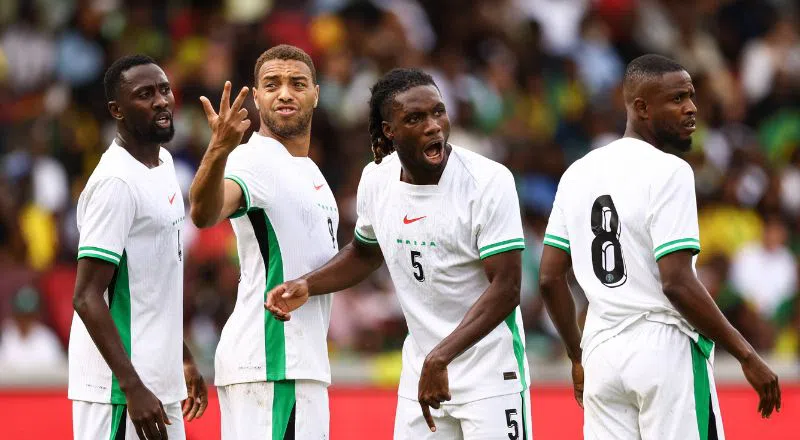
As the clock ticks toward Morocco, the heartbeat of Nigerian football grows louder, and the narratives that define a campaign begin to take shape. At the center of it all sits AFCON preparations and Super Eagles news, a mosaic of form, selection puzzles, and the human spirit that pulls a nation together after the sting of a World Cup miss.
In London, Samuel Chukwueze is rediscovering his swagger. In Izmir, Paul Onuachu has just delivered a performance few saw coming, turning from sharpshooter to last-ditch defender. Back home, voices from past glories like Tijani Babangida and Femi Ajilore are urging a squad rich in talent to find balance and belief. All of it matters, and all of it adds up to the same question, can Nigeria channel potential into a fourth continental title.
Chukwueze’s rise at Fulham and the calm around his future
After a rocky spell in Italy, Chukwueze’s Fulham chapter has felt like fresh air. AC Milan’s loanee has produced headline moments, including two goals against Manchester City, the kind of statement that shifts a player from squad option to central pillar. The temptation for fans is obvious, push for a permanent transfer, secure the winger for the long haul, and make him a building block for Fulham’s identity and for Nigeria’s rhythm at AFCON.
Marco Silva, however, prefers patience. Speaking about the option to buy, the Fulham manager struck a measured tone.
“A permanent deal? I don’t think it’s the right time to talk about it. We have time to make that decision. We’re relaxed about it, and so is he.”
In other words, focus on the football first, decisions later. It is a stance that suits a player who has started to look liberated and a coach who values control over noise.
Silva’s praise goes beyond numbers.
“He’s mature, has quality, and is a creative player. We want to see more from him, even if he doesn’t have to prove his worth every single game, because he’s an international player who comes from a big European club and knows what pressure means.”
Between the lines is trust, something Chukwueze has repaid with energy and incision, and something the Super Eagles can tap into when camp opens in Morocco.
There is another layer that matters in a tournament setting.
“Beyond his qualities as a player, he spreads good vibes to everyone. He’s a good guy and enjoys battling with us every single day. It’s nice to see him always smiling. Then when he has to work, he works.”
Morale is fuel at AFCON, and Chukwueze’s demeanor, Silva suggests, lifts a dressing room. For a national side aiming to stitch together confidence quickly, that intangible is gold.
VAR fine margins and Fulham’s wobble
Momentum is fragile. Fulham learned that in a 2-1 loss to Crystal Palace at Craven Cottage, where a flowing move appeared to give the hosts the lead, only for technology to intervene. Chukwueze crossed from the left, Alex Iwobi headed against the bar, and Emile Smith Rowe finished the rebound. Then came the check, then came the flag.
Silva’s post-match verdict captured the exasperation felt inside the ground.
“I think we scored a brilliant goal, a very good combination, it was going to boost ourselves. Of course, again, the goal was disallowed. Probably the toenail of Chukwueze is too big for the sport that we are playing. Now, another decision from the VAR against us.”
He added that Fulham’s tempo dropped after the incident and that their buildup became too slow, a reminder that the psychological swing from a marginal call can shape a result.
Context matters for Nigeria too. Fulham have lost seven of their last ten league matches and sit 15th, four points above the relegation places. The club also expects to lose key Nigerians to international duty in the coming days, including Alex Iwobi, Calvin Bassey, and Chukwueze. How players arrive to camp, physically and emotionally, often sets the tone of a tournament. Managing that transition will be one of the quiet battles in the background of Nigeria’s AFCON plan.
Onuachu’s centre-back cameo and a new selection conversation
In Turkey, Paul Onuachu turned a game and sparked a conversation. Known as a giant in the penalty area and top scorer in the Super Lig with 11 goals, the 31-year-old was asked to do the unexpected in Trabzonspor’s 2-1 win at Goztepe, marshal the back line after a late red card. He did not just cope, he excelled.
Across roughly twenty tense minutes he put up defender’s numbers, winning 13 duels, making 11 clearances, including 11 with his head, adding three recoveries, and completing 10 headers from 16 attempts. He even blocked a shot. The snapshot was not a long-term audition for a new position, but it was a masterclass in commitment and presence under pressure, the kind of act that resonates with fans and coaches alike.
Trabzonspor manager Ozan Tufan, reflecting on the chaos and the resolve, highlighted the spirit inside the group.
“We fought very well, even when we were down to 10 men. We were happy that Onuachu came in to help in defence and that our other teammates saw this and contributed. I think we’ve established a very good atmosphere as a city and a team.”
It was an important victory too, with Ernest Muci scoring twice and Goztepe’s Anthony Dennis pulling one back, a result that kept Trabzonspor second in the table, two points behind Galatasaray.
Nigeria noticed. A flurry of reactions captured the mood, from memories of Onuachu’s position switches as a youngster to the playful suggestion that he might be William Troost-Ekong’s replacement at center-back. The truth is simpler and more useful, versatility is a gift in tournament football. Even if Onuachu never lines up at the back for Nigeria, his willingness to solve problems can help a squad weather the storms that invariably come in Morocco.
The title chase context that sharpens form
Form under pressure is different from form in comfort. Trabzonspor’s push near the top and the demands of Fulham’s survival fight create environments where every action feels decisive. For Onuachu, the experience of closing out a game with ten men will stick. For Chukwueze, the VAR sting and the insistence on patience will harden resolve. Both stories carry into camp, both can influence performances when the margins are thin.
Babangida’s challenge to the engine room
Talent is not the issue in attack, and Tijani Babangida has said as much. He sees a front line featuring Victor Osimhen, Ademola Lookman, Victor Boniface, Umar Sadiq, and Chukwueze, and he sees trouble for any defense. Still, he draws a clear line between potential and production, the Super Eagles will go as far as the midfield allows them to go.
Speaking about recent evidence, Babangida recalled the friendly against Congo and did not sugarcoat it.
“I still remember the game against Congo, the midfield of Super Eagles was very poor and there was no supply of balls to the attackers from the second half.”
He noted that Wilfred Ndidi and Iwobi were dragged into deeper duties, while fullbacks spent more time defending than supporting, which choked the supply to the forwards.
The fix, in his view, is structural and personnel based.
“Super Eagles need a very strong midfield to bring out the best in the attackers.”
He welcomed the injection of fresh options, pointing to new faces invited by head coach Eric Chelle, including Ebenezer Akinsanmiro from Pisa, as potential catalysts for a more creative and balanced engine room.
New faces and the creativity question
Group C places Nigeria alongside Tunisia, Uganda, and Tanzania, a mix that will test control as much as flare. Against compact blocks, the pass before the assist often defines the result. This is where Babangida’s warning rings loudest, if the midfield knits play and manages transitions, the attackers will feast. If not, pressure grows with every minute and space disappears quickly.
For Chelle, the choices in the middle will be about chemistry as much as names. The right blend of a ball winner, a progressor, and a line-breaker can unlock the best of Osimhen’s runs, Lookman’s incisive dribbles, and Chukwueze’s deliveries. Tournament football rarely gives time to experiment, so camp will be decisive.
Pride, redemption and the weight of expectation
The words redemption and consolation are not thrown around lightly in Nigerian football, but they are unavoidable this month. After a second straight World Cup miss, Femi Ajilore framed the mission with honesty. Winning AFCON cannot erase the pain, but it can give fans something real to hold onto, a surge of pride, a measure of healing for a football nation that expects to compete on every stage.
Ajilore’s call is simple and demanding, give everything in Morocco and chase a fourth title. It aligns with Babangida’s message of possibility and responsibility, a belief that this squad can at least reach the final, and that anything can happen in a cup game. The challenge is to turn those words into habits, to make every training minute count, to convert half chances, and to manage nerves when the moment arrives.
Logistics, schedule tweaks and off-field noise
Preparation is rarely smooth. Reports noted a FIFA directive that pushed a pre-tournament friendly with Egypt to a new date, since clubs were allowed to keep players until December 15. There have also been claims that the Nigeria Football Federation owes Eric Chelle three months of salary and bonuses. None of this breaks a campaign, but it does test focus and unity, two qualities that title winners tend to possess in abundance.
These realities place a premium on leadership inside the group. Senior players will need to insulate the dressing room and keep standards high. Chelle’s staff will need to manage load, integrate late arrivals quickly, and sharpen set plays. In tight AFCON matches, details from rest defense to restarts, from substitutions to game state control, often decide who advances.
What it all means for Group C
If there is a through line to this week’s stories, it is adaptability. Chukwueze’s evolution at Fulham, Onuachu’s emergency defending, and the push to refresh the midfield all point to a squad learning to solve problems. Nigeria’s path through Group C will demand precisely that, break down stubborn defenses, remain compact when games turn wild, and squeeze points from difficult spells.
Three burning questions frame the opening phase,
- can the midfield supply Osimhen and company with enough quality service,
- will wide creativity from players like Samuel Chukwueze tilt tight matches,
- and can Nigeria stay calm in the big moments to avoid self-inflicted setbacks.
Answer them well, and the quarterfinals and beyond become a stage rather than a threat. Slip on any one, and the margin for error vanishes quickly.
The human pulse behind the headlines
What makes this Super Eagles story compelling is not only the star power, it is the humanity on display. Chukwueze smiling through scrutiny and bringing light to a dressing room. Onuachu, a leading scorer, volunteering to clear crosses as a stand-in defender for his teammates. Veterans like Babangida and Ajilore speaking from experience about pride, about structure, about what it takes to turn a squad into a champion.
The last AFCON ended in disappointment for Nigeria, a 2-1 defeat to hosts Cote d’Ivoire in the final. The memory stings, but it also instructs. Margins are small, and focus must be relentless. This month’s mosaic of form, feedback, and fight shows a team and a nation ready to try again, aware of the flaws, buoyed by the talent, and driven by the promise that in Morocco, the story can end differently.
AFCON always reveals character. For the Super Eagles, character has already begun to show in the club trenches of London and Izmir, in the candor of legends, and in the quiet decisions that will shape the starting eleven. The rest will unfold on North African nights, where belief meets execution and where, if Nigeria finds its rhythm, redemption might yet become reality.